High floor: restoring 5G DAS dominance over the macro cells
Walk test on the 14th floor of an office tower, 5G SA n78, original DAS then extended DAS.
- Median SINR on the floor
- 7becomes20 dB
- Median DL throughput
- 160becomes714 Mbit/s
- Pilot pollution alerts
- 2becomes0
Symptom
Observations
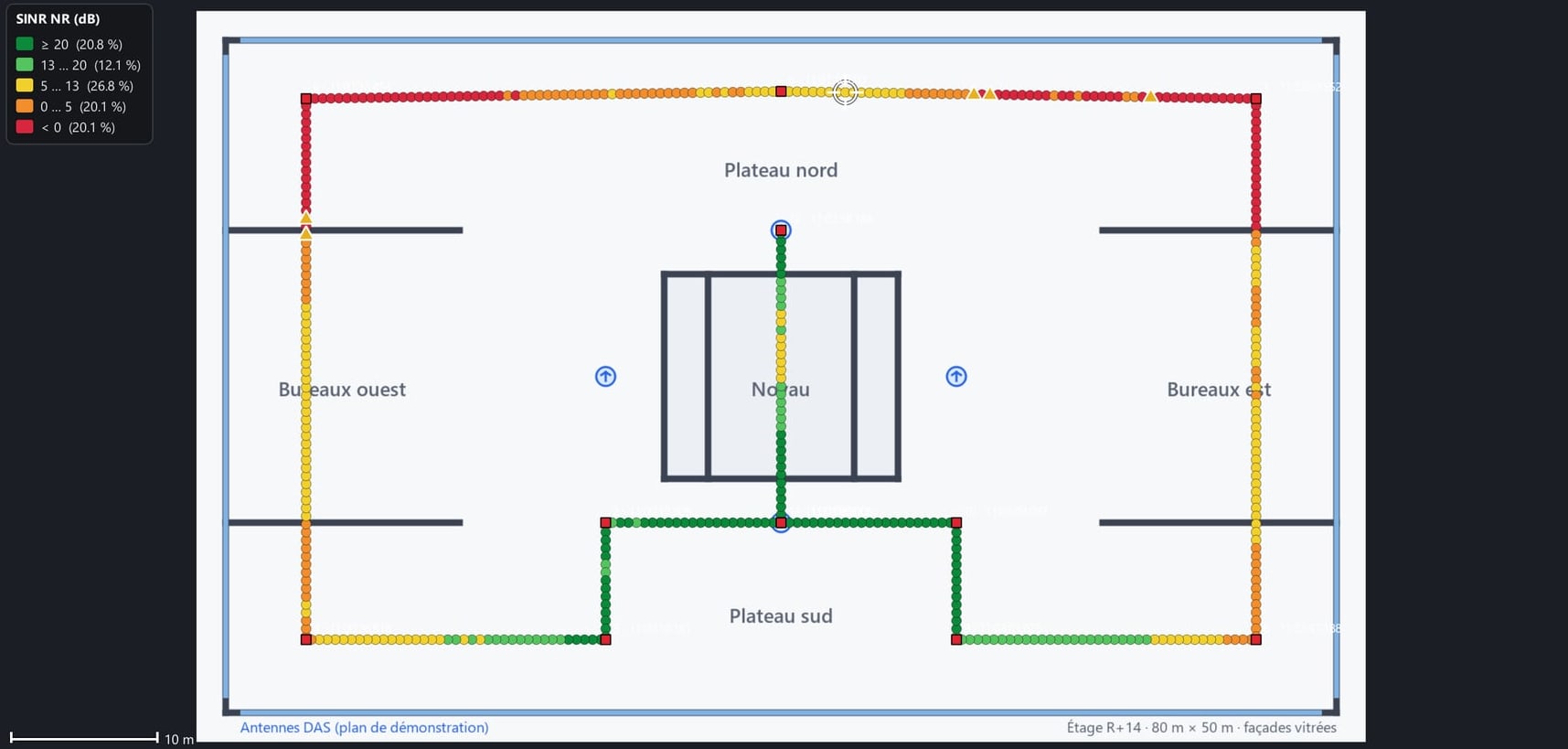
On the 14th floor, workstations along the façades experience highly variable throughput, while the interior of the floor is well served. The original DAS, installed in the corridors around the building core, was intended to cover the entire floor.
Data collected
- Walk test on the floor plan, with waypoints placed on the plan
- A 5G SA test UE: chipset trace, downlink transfer
- A route along the four façades, then through the core
Lessons learned
Key points
- 01
On high floors, indoor cell dominance is decided at the façades: that is where the measurement points must be placed.
- 02
A high received level is not enough; it is the delta to the best neighbor that determines SINR.
- 03
Acceptance testing compares the same walk, on the same floor plan, before and after correction.
 3 min 44 s
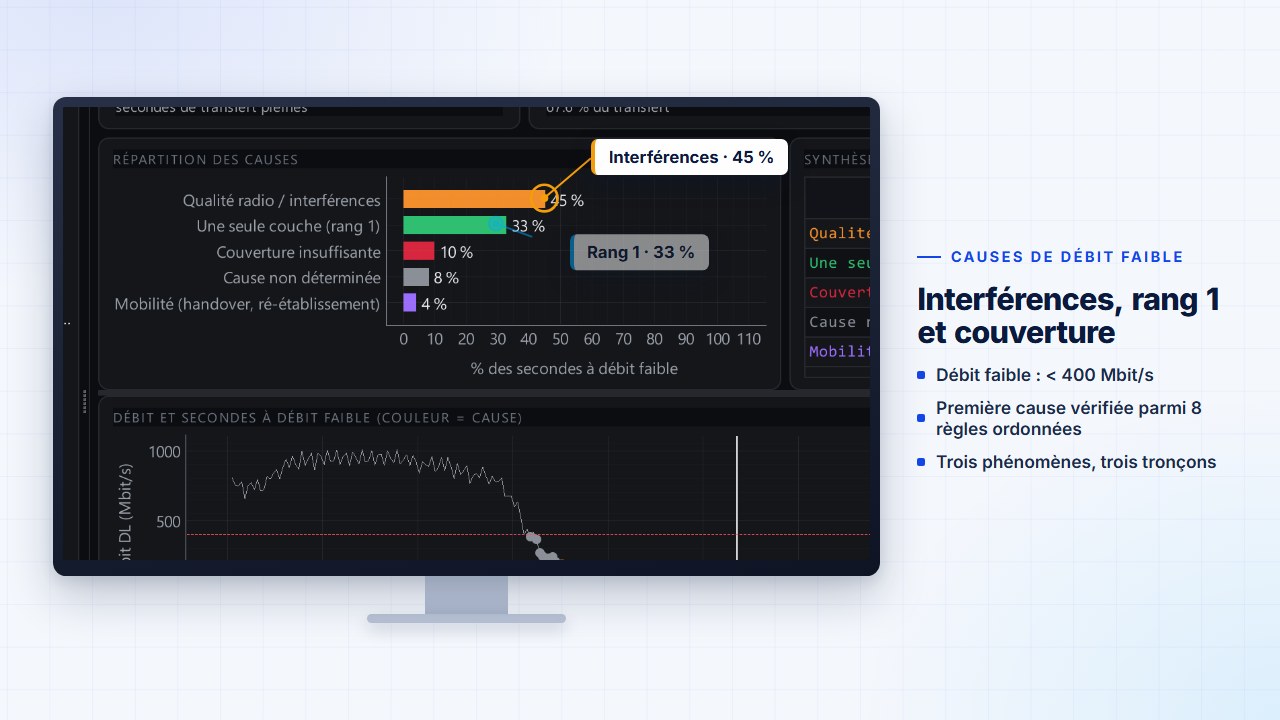
Video · 3 min 44 s
Case studies: three RF investigations
Degraded 5G throughput on an urban route, uplink noise rise on a shared DAS, pilot pollution on a high floor: three investigations replayed in AKCELL Analyzer, from symptom to verification after correction.
Chapter “Pilot pollution on a high floor” at 2:56
AKCELL Analyzer
The same method, applied to your own traces.
Post-processing software: synchronized replay, decoded signaling, event engine, low-throughput causes, before/after comparison, benchmarking and reports.